Qatar Set to Host Electric Transport and Autonomous Mobility Forum in Doha
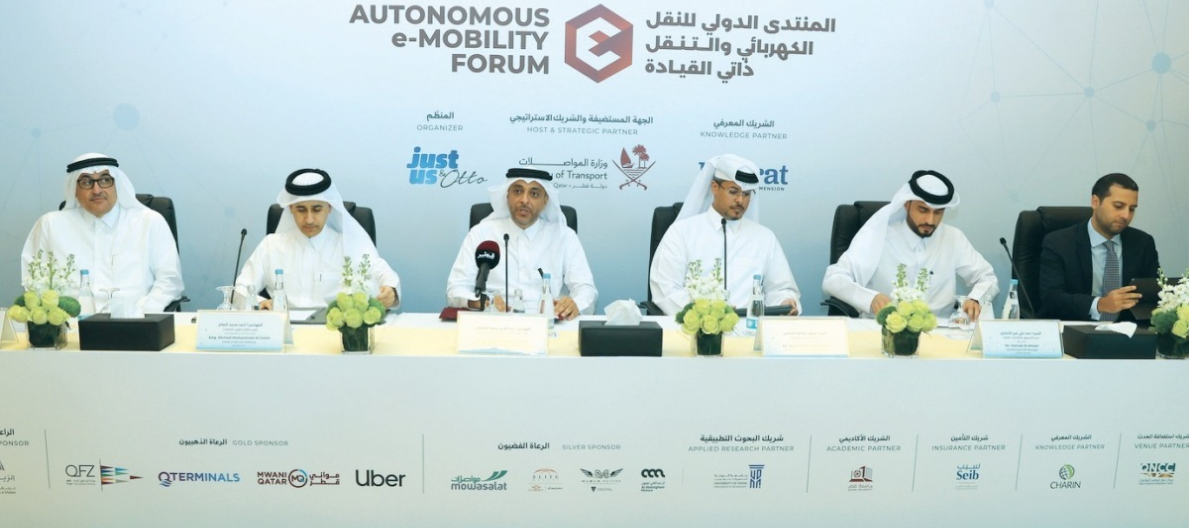

Qatar is preparing to host the second edition of the International Forum on Electric Transport and Autonomous Mobility on September 7 and 8 at the Qatar National Convention Centre, bringing together government entities, global companies, experts, and specialists from the transport and technology sectors.
Eng. Abdullah bin Saif Al Sulaiti, Assistant Undersecretary for Land Transport Affairs, said Qatar’s transport sector is witnessing rapid development, driven by the Ministry of Transport’s efforts to develop smart and sustainable mobility solutions and deploy advanced technologies and artificial intelligence to improve transport efficiency, quality of life, environmental performance, and safety.
Al Sulaiti noted that Qatar has made significant progress in transitioning to environmentally friendly public transport, with more than 70% of the public bus fleet already converted to electric buses, while the country aims to reach 100% by 2030, alongside the development of the infrastructure required to support the transition.
He also highlighted the Ministry’s autonomous vehicle strategy and the first phase of operational trials for electric autonomous taxis, conducted with partners to test technical and operational aspects and assess safety and efficiency ahead of potential wider deployment within Qatar’s public transport network.
Integrating Transport Networks
Eng. Ahmed Mohammed Al Saleh, Chief Operations Officer at Qatar Rail, said the company’s participation in the forum reflects its commitment to supporting the development of an integrated, safe, flexible, and sustainable public transport system.
He noted that Qatar Rail will highlight the role of the Doha Metro and Lusail Tram in supporting smart, reliable, and sustainable mobility, while showcasing the solutions and services provided by its networks to businesses, individuals, residents, and visitors.
Supporting Innovation and Global Companies
Saud Abdullah Al Saadi, Director of Business Development at Qatar Free Zones Authority, said the authority provides a business environment and infrastructure that enable global and regional companies to develop and test their solutions and expand from Qatar into regional and international markets.
He explained that the transformation of the transport sector extends beyond electric vehicles and autonomous driving to include supply chains, ports, warehouses, distribution centres, and logistics and industrial efficiency.
Meanwhile, Hamad Ali Al Ansari, Director of Marketing and Public Relations at Mwani Qatar, emphasized the importance of innovation and knowledge exchange in building more efficient and sustainable transport systems. He highlighted the company’s expansion in electric operational equipment, automation technologies, environmentally friendly mobility solutions, and digital systems.
He added that Mwani Qatar’s participation in the forum represents an extension of its efforts to adopt innovative solutions and explore opportunities that can help shape a smarter and more sustainable future for the transport and logistics sector.
More Than 40 Speakers and 20 Sponsors
The forum will feature more than 40 regional and international speakers representing government entities, industry, academia, technology, and research, along with more than 20 sponsors and partners.
The event will include more than 50 keynote speeches and panel discussions across 10 specialized tracks covering electric transport and autonomous mobility from technological, policy, regulatory, sustainability, infrastructure, research, and practical perspectives.
An accompanying exhibition will also feature more than 20 exhibition spaces, showcasing autonomous vehicles, electric mobility solutions, smart infrastructure technologies, and emerging innovations.
Antonio Al Asmar, General Manager of Uber Qatar, reaffirmed the company’s commitment to using technology to reduce the environmental impact of transportation. He highlighted the importance of accelerating the shift toward hybrid and electric vehicles and expanding shared mobility services to reduce reliance on private cars and maximize the efficiency of investments in public transport infrastructure.
Related news
The Qatar Events Show has doubled its exhibition space, with more than 5,000 visitors expected to attend.

“As artificial intelligence advances rapidly, strengthening cyber defenses has become an immediate priority to counter increasingly sophisticated attacks.”