
- Home

- All articles and posts
- Article or Post Details
Tower Crane or Mobile Crane? Which One Fits Your Project in Qatar
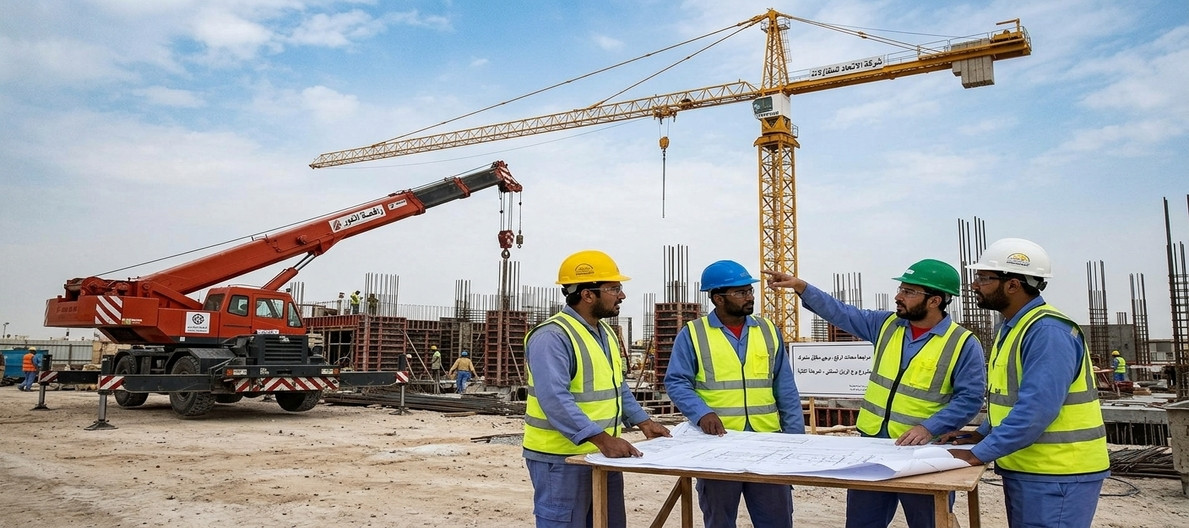

Choosing the type of crane isn't a minor technical detail on any construction project — it's a decision that directly shapes the timeline and overall cost of the entire job. A tower crane and a mobile crane do the same thing in principle — lift and move heavy loads — but they differ fundamentally in how they operate, what they cost, and what kind of projects they actually suit. Picking the wrong one doesn't just mean less efficient performance; it can mean schedule delays or extra costs that were never in the original budget.
That decision carries even more weight in a market like Qatar, where projects range from high-rises in dense central districts, to industrial facilities and infrastructure spread across large areas, to smaller, time-limited projects that need a fast solution without a long-term commitment. Each of these project types calls for a completely different logic when picking the right crane.
Direct Comparison: Tower Crane vs Mobile Crane

When Is a Tower Crane the Right Choice?
If your project involves constructing a tall building that runs for several months or years, with a need for repeated, continuous lifting at every new floor, a tower crane is the more efficient choice long-term despite its higher upfront cost. It's also the better fit for dense urban sites with limited ground space, since its footprint after installation is relatively small compared to how much of the site it can cover through rotation and horizontal reach. Large-scale industrial projects, towers, and facilities that require repeatedly lifting heavy materials to significant heights throughout the build are particularly well suited to this type of crane. Keep in mind that the decision to use a tower crane needs to be made early in the project's engineering design phase, not after construction starts, since the foundation location and rotation radius have to be coordinated with the full site plan from the outset.
When Is a Mobile Crane the Right Choice?
If your project is short-term, or requires a specific lifting task that doesn't justify a fixed crane sitting there for months, a mobile crane saves you the cost of a foundation and complex setup, and can start working within hours of arrival. It's also the better fit for projects that require moving between several work sites or scattered lifting points within the same site, or for unplanned, urgent tasks that can't wait weeks for installation. Flexibility is the deciding advantage here: it can arrive and finish the job the same day if the task is limited. This type is also useful as a temporary backup on projects already using a tower crane, to cover quick lifts in spots outside the fixed crane's rotation radius.
Safety Considerations Differ Between the Two
Safety is critical for both types, but the focus points differ. With a mobile crane, you need to confirm the stability of the ground it will stand on and ensure the outriggers are deployed correctly to widen the stability base and prevent tipping, especially when lifting at angles or weights close to maximum capacity. With a tower crane, the focus shifts to the safety of the assembly and dismantling process itself, and continuous wind speed monitoring — since strong winds pose a direct risk to load stability and the entire structure's integrity at greater heights. In both cases, having a licensed operator properly trained on that specific crane type isn't optional — it's a non-negotiable requirement, regardless of schedule pressure.
A Practical Question Before You Decide: What Actually Determines Your Choice?
Before finalizing the decision, ask yourself three specific questions: How long will you actually need the crane? What's the maximum height and load weight your project requires? And does the crane need to stay fixed in one spot, or move between multiple work sites? The answers to these three questions effectively settle the decision in most cases, without needing any further complex analysis.
The Bottom Line: The Decision Comes Down to Project Duration and Height, Not Price Alone
There's no absolute "better" choice between a tower crane and a mobile crane — only the one that fits your project's specific requirements. Judging purely by daily rate without factoring in project duration, height, and on-site mobility needs is the most common mistake contractors make with this exact decision. On many large projects, the choice isn't strictly one or the other — it's a combination of both: a fixed tower crane for continuous lifting throughout the build, backed by a mobile crane for quick tasks or areas outside the fixed crane's rotation radius.
Whether you decide to buy a crane through the Equipment Bazaar or rent one for a set period through the Equipment Rental service on the Muqawlat Qatar platform, you can browse both crane types listed directly by sellers and lessors within the local market, and compare specifications and condition before making your final call.
Other articles
Surplus construction materials and equipment do not have to become a storage cost or lose their value over time; regular inventory checks, proper classification, and realistic pricing can turn them into cash. This article outlines practical steps to sell surplus items and reach relevant buyers across Qatar’s construction and industrial sectors.

Marketing construction and industrial services requires precise access to decision-makers rather than broad exposure to an undefined audience. This article outlines five practical steps for building an effective B2B marketing strategy based on audience targeting, proven expertise, measurable results, and trust across the right channels.

Qatar’s construction sector is moving toward more diversified growth, driven by energy and infrastructure projects, economic diversification, maintenance, and emerging technologies. The article explores the key opportunities and challenges for contractors and suppliers, and how the Muqawlat Qatar platform helps them access new tenders and business opportunities.

In construction, not every opportunity comes through open tenders; professional relationships and referrals can unlock projects that are never publicly advertised. This article explores how contractors can build a strong, lasting B2B network and turn it into a valuable source of new opportunities.