
- Home

- All articles and posts
- Article or Post Details
How to Secure Qualified Engineering Talent for Construction Projects in Qatar?
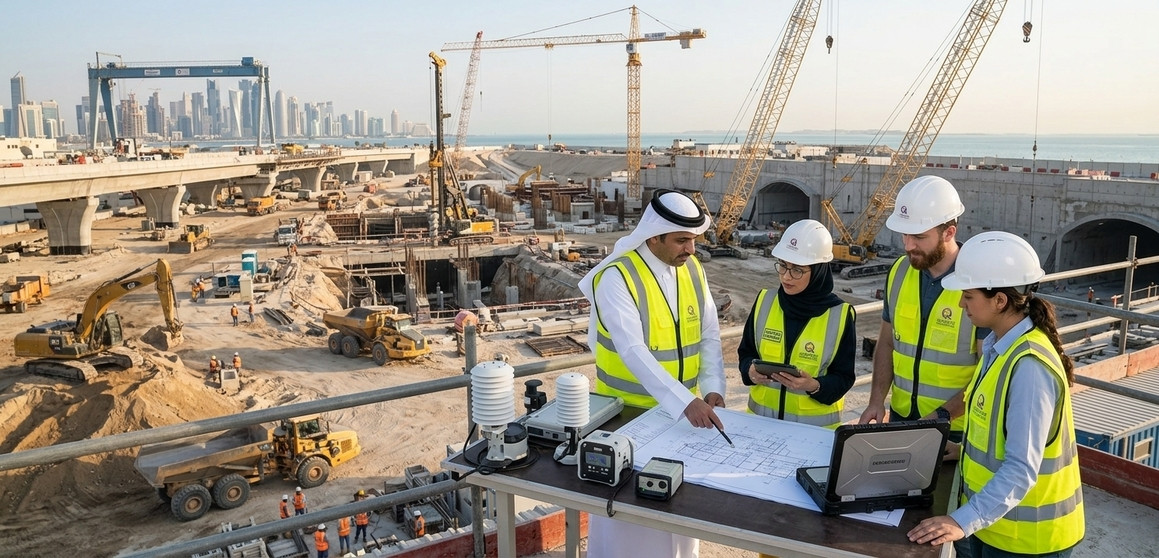

Qatar's construction sector keeps expanding through major infrastructure and urban development projects, but that growth is running into a bottleneck that never shows up in a budget report or a published timeline: a shortage of qualified engineers actually capable of delivering this scale of work at the required quality and speed. The problem isn't a lack of job applicants—it's a lack of the right qualifications, and that's a fundamental distinction that changes how any serious contractor needs to approach this challenge. Companies that recognize this early treat hiring as an ongoing process, while those that ignore it end up chasing every vacancy as an emergency, exactly when they need that expertise the most.
The real gap: plenty of applicants, scarce qualifications
Qatar's hiring market shows a recurring pattern: a large volume of applications for entry-level positions, against a clear shortage of mid-to-senior level talent in precise engineering specialties. Many applicants hold solid academic qualifications but lack the hands-on, immediately deployable skills needed for specialized projects—which means "number of applicants" alone doesn't reflect the real state of the engineering job market at all. The result is that a hiring cycle for a specialized engineering role often stretches far longer than expected— not for lack of interest in the position, but because so few candidates actually meet its real requirements.
Why does this happen in Qatar specifically?
Several interconnected factors explain the severity of this gap in the Qatari market in particular:
The relatively small size of the national workforce, which makes the local market heavily reliant on talent coming from abroad to fill specialized engineering roles, particularly on major projects requiring precise technical expertise.
Localization (Qatarization) requirements, which mandate certain quotas for hiring national talent into specific roles—a policy with a legitimate goal, but one that adds an extra layer of planning to the hiring process, especially in specialties where qualified national talent is currently limited.
The accelerated pace of projects driven by Qatar National Vision 2030 and major infrastructure works, which pushes demand for engineering talent at a rate that sometimes outpaces the local and regional market's ability to supply the right expertise immediately.
Additional regulatory complexity tied to work permits and visas, which—despite ongoing reforms to the sponsorship system—still adds time and process to the hiring cycle, particularly when bringing in talent from outside the country.
What does this mean for your project in practice?
The direct impact of this gap isn't just the difficulty of finding the right candidate—it extends to the project timeline itself, when the start of an actual phase gets delayed waiting for a specialized engineer with no readily available substitute. The impact also shows up in cost: competition over a limited pool of qualified talent drives up the salaries and incentives needed to attract and retain the right hire, a factor that needs to be built into the project budget from the start, not discovered later as a surprise. There's a third, less obvious but equally important impact: when a company is forced to hire a less-qualified candidate than needed because of time pressure, the cost of that decision shows up later in execution quality or in the need for corrections and rework that consume far more time and budget than a proper hire would have cost from the outset.
Read about:
Guide to Winning Government Tenders in Qatar
How to Avoid Construction Material Shortages
3 Practical strategies to secure the right talent
1. Widen your search before you actually need the candidate
Waiting until an actual project need arises before starting to search for a specialized candidate effectively means you're starting the race already behind every other company chasing the same talent at the same time. Build an ongoing database of potential candidates for the recurring critical roles in your projects, even before the vacancy officially opens, and maintain periodic contact with them, even informally—this shortens your actual response time when the need arises unexpectedly.
2. Invest in developing local talent instead of relying solely on external search
Since much of the market gap is a practical-skills gap rather than an academic-qualifications gap, investing in training and developing promising local talent—whether through internal training programs or pairing with more experienced engineers to transfer hands-on knowledge—can build a sustainable talent pipeline over the medium term, instead of permanently relying on external recruitment as the only solution to every gap that appears.
3. Factor the actual hiring cycle into the project timeline from initial planning
If hiring a specialized engineer typically takes several weeks or months because of scarce qualified talent and visa requirements, that time needs to be explicitly built into the project timeline from the planning stage — not discovered later as an unexpected delay when it's time to execute a specific phase that depends on that hire.
In conclusion: It's as much a management gap as a talent gap
Treating the engineering talent shortage as an emergency every time a project needs a specialized engineer is a costly, unsustainable approach. Treating it instead as a permanent structural challenge requiring proactive planning—a ready candidate database, investment in training, and a realistic hiring-cycle timeline — is what separates companies able to deliver their projects on time from those that fall behind waiting for the right talent to show up at the last minute. This shift in mindset—from "hire when needed" to "always ready"—is the practical difference that determines which companies execute their projects smoothly and which stay chasing the gap indefinitely.
How does Muqawlat Qatar platform speed up access to the right talent?
Instead of relying solely on traditional, slow-to-respond hiring channels, Muqawlat Qatar platform's Jobs and Professionals services provide a direct digital database bringing together job seekers and engineering and technical talent within the local market in one place, cutting down the time spent searching for the right candidate instead of scattering that search across fragmented, unverified sources. The platform also provides access to talent and technicians for short-term contracts, not just permanent, long-term hires—which specifically suits projects that need a temporary boost to their engineering or technical team for a defined period without a full hiring commitment. This kind of digital solution reflects part of the broader shift underway in Qatar's construction and industrial sectors toward adopting digital tools that cut the time and cost of processes traditionally reliant on scattered personal connections and slow manual searching.
Other articles

A guide to requesting engineering and technical talent directly through Muqawlat Qatar platform for companies and how engineers and technicians can add their CVs to reach real opportunities in Qatar's construction and industrial sectors.

Construction projects in Qatar exceed their budgets due to design changes, unforeseen site conditions, rising material costs, and delays. Discover the key drivers of cost overruns and how better planning, risk management, and cost control can help protect project budgets.

Surplus construction materials and equipment do not have to become a storage cost or lose their value over time; regular inventory checks, proper classification, and realistic pricing can turn them into cash. This article outlines practical steps to sell surplus items and reach relevant buyers across Qatar’s construction and industrial sectors.

Marketing construction and industrial services requires precise access to decision-makers rather than broad exposure to an undefined audience. This article outlines five practical steps for building an effective B2B marketing strategy based on audience targeting, proven expertise, measurable results, and trust across the right channels.