
- Home

- All articles and posts
- Article or Post Details
Qatar's Supply Chain | How to Avoid Construction Material Shortages
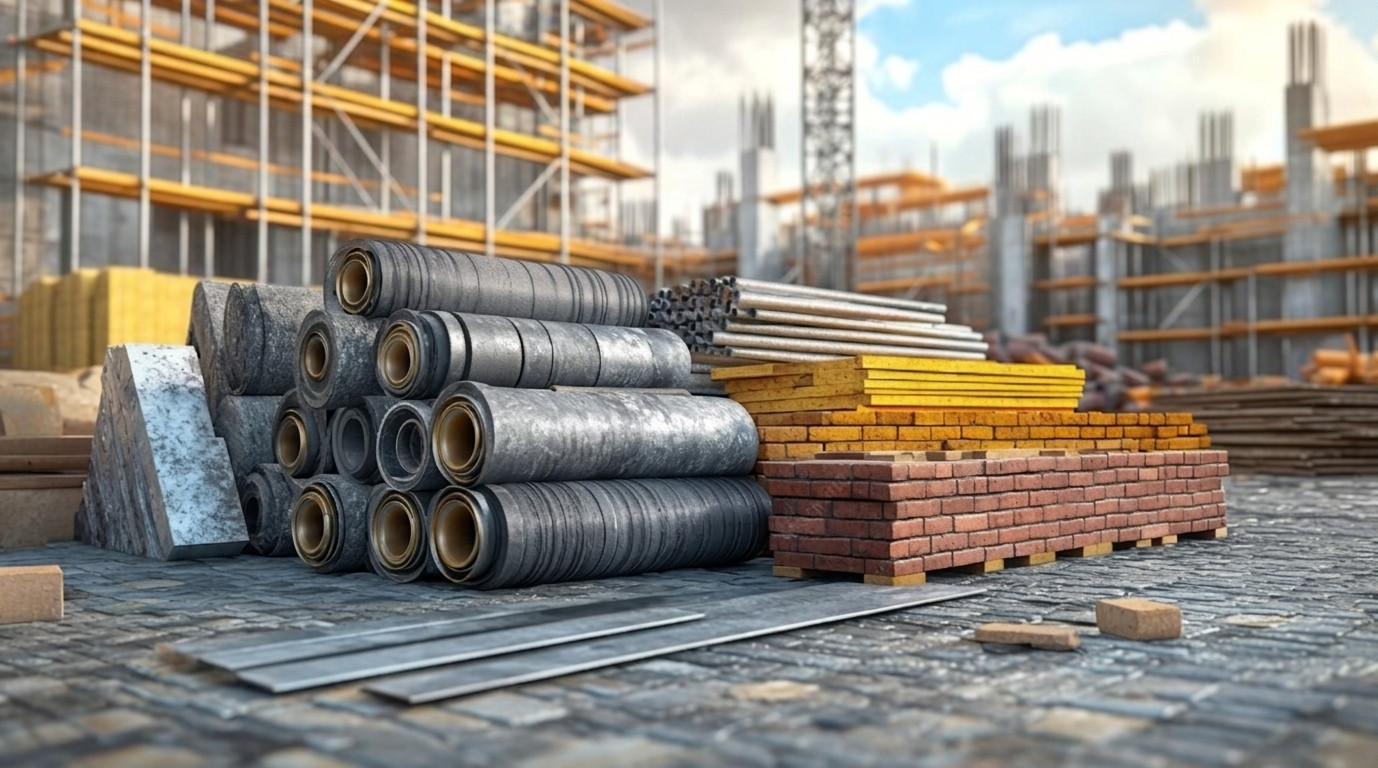

Picture this: your project is running exactly on schedule, the pouring crew is set to start next week, and then you get a call from your one and only supplier — the steel shipment is stuck at the port, no confirmed delivery date. There's no backup supplier lined up, no buffer stock on site. The result: the whole crew grinds to a halt, labor sits idle, rented equipment keeps racking up its daily cost whether it's running or not, and delay costs pile up day after day without the project moving forward an inch.
This scenario isn't an outlier in Qatar's construction sector — it's the natural outcome of how many contractors operate: relying on a single source, with no backup plan, and no real visibility into what's happening upstream of that one supplier. What makes it worse is that many project contracts in Qatar carry time-bound delay penalties, which means a supply disruption doesn't just cost you lost work days — it can turn a profitable project into one that bleeds margin day by day, all because of one broken link in the supply chain.
Join- Member club - the biggest digital gathering of suppliers in Qatar.
Why Does This Happen in Qatar Specifically?
The deeper cause lies in demand rhythm, not geography. Qatar's construction sector regularly sees several major projects overlapping in the same window, and that surge in demand sometimes outpaces production capacity that was originally sized for normal market needs, not recurring exceptional peaks. Local factories producing materials like steel can efficiently cover standard, commonly used grades — but when several massive projects converge at once, or when a specific project calls for a specialized grade or precise technical spec that isn't part of existing local production lines, importing shifts from a backup option to a direct operational necessity. On top of that, some materials — specialized concrete additives, for instance, or products tied to specific international compliance certifications — are linked to technical standards or approvals not yet available within local industry, which makes importing a permanent part of the supply chain regardless of market size or demand season.
This partial reliance on imports means any disruption outside Qatar's borders — shipping rate fluctuations, delays at export ports, or swings in global raw material prices — feeds directly into local delivery timelines and costs, no matter how precisely you've planned internally. Add to that Qatar's intense heat and humidity, which puts real constraints on pour timing and concrete curing: a delay in a core material's arrival doesn't just mean lost work days, it can mean missing the specific climate-appropriate window for a given pour altogether, doubling the actual impact of the delay on the project's overall schedule. That makes precise supply timeline planning more important than ever — not less.
3 Practical Steps to Protect Your Project From Disruption
1. Map Your Real Supplier Chain — Not Just Who You Deal With Directly
Most contractors know their direct supplier well, but know nothing about who supplies that supplier in turn. If your direct supplier relies on a single raw material source or a single overseas manufacturer, you're exposed to the same risk without even realizing it — even if your relationship with your direct supplier is excellent. Ask your key suppliers directly about their actual sourcing, and identify any single link in that chain that could shut everything down if it breaks. Start this exercise with critical materials first — the ones with no quick substitute or a known pattern of delivery delays — before trying to map every material used across the project.
2. Diversify Your Sources Before You Need To, Not After
Relying on a single source for a critical project material is one of the easiest weaknesses to fix — and one of the most commonly ignored, simply because the current supplier "has been fine so far." That logic only holds until the first disruption hits. Line up a reliable second source for every core material, even if you don't actually use it under normal conditions, so it's ready to go the moment you need it instead of starting negotiations from scratch mid-crisis. The more geographically or commercially diverse your sources are, the less exposed you are to a single event knocking out one supplier — whether that's a shipping delay or an internal operational issue at the supplier itself. Through the online Store on the Muqawlat Qatar platform, you can access multiple construction material sources directly within the local market, giving you a ready backup option before you actually need one, not after it's too late.
3. Manage Your Inventory by Priority, Not Evenly
Holding a large stock of every material isn't financially practical, but holding zero buffer stock at all is a far bigger risk than the cost it appears to save. Classify materials by how critical they are to the project and how volatile their delivery timelines tend to be: materials that are hard to replace quickly or that show a clear pattern of delivery fluctuation deserve a higher buffer stock, while locally abundant materials — like domestically sourced aggregate — don't need the same level of reserve. This classification gives you real protection without tying up unnecessary capital in stock you don't need, and it can also be coordinated with nearby projects to share common storage points instead of duplicating the same inventory at every site.
Back to the Scenario: How Could the Shutdown Have Been Avoided?
If the contractor in the opening scenario had already lined up a second steel supplier, or kept a buffer stock covering an extra week of work based on classifying that material as critical, the site wouldn't have shut down entirely over one delayed shipment. They could have simply switched to the backup source, or pulled the needed quantity from buffer stock, while the original supplier's shipment continued on its way without work waiting on it. The difference between a project that rides out a crisis smoothly and one that grinds to a complete halt usually isn't budget size — it's how well-prepared they were for exactly this scenario, and whether there was a written plan the procurement team already knew, instead of improvising mid-crisis.
A strong supply chain isn't one that never faces disruption — that's unrealistic in any market partially dependent on imports. A strong supply chain is one designed in advance to absorb those disruptions without bringing the entire project to a stop.
Other articles

3 real-world applications of AI in the construction sector in use today, backed by documented figures, and how this connects to Qatar's push to make AI a national priority.

A guide to requesting engineering and technical talent directly through Muqawlat Qatar platform for companies and how engineers and technicians can add their CVs to reach real opportunities in Qatar's construction and industrial sectors.
Construction projects in Qatar exceed their budgets due to design changes, unforeseen site conditions, rising material costs, and delays. Discover the key drivers of cost overruns and how better planning, risk management, and cost control can help protect project budgets.
Surplus construction materials and equipment do not have to become a storage cost or lose their value over time; regular inventory checks, proper classification, and realistic pricing can turn them into cash. This article outlines practical steps to sell surplus items and reach relevant buyers across Qatar’s construction and industrial sectors.