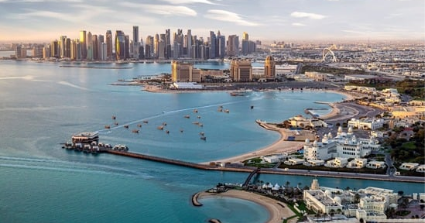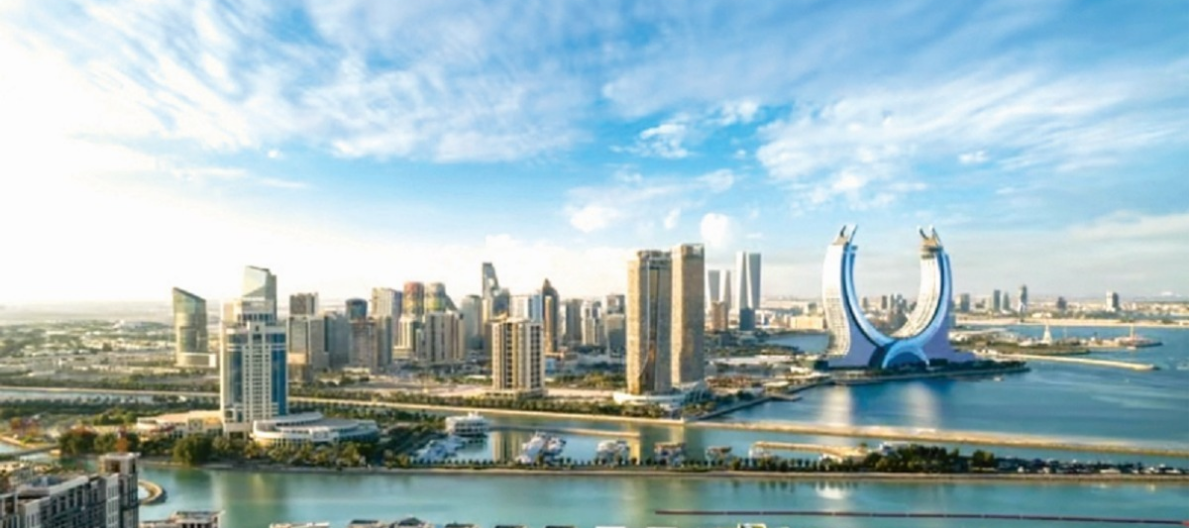

According to ValuStrat, Doha’s residential real estate sector entered a phase of relative stability, with the price index recording a slight decline of 0.3% in the final quarter of 2025. Villas showed greater resilience than apartments, maintaining stronger capital values in prime areas such as Al Waab and West Bay. Meanwhile, the rental market faced stronger downward pressure, with residential rents dropping by about 1.5% due to a surge in new supply in emerging areas like Lusail and The Pearl Island.
In the commercial sector, total office space reached around 5.6 million square meters by the end of 2025, with Lusail contributing the largest share of new developments. Despite the increased supply, prime office locations in West Bay maintained occupancy rates near 80%, alongside a clear shift toward high-quality modern spaces, which left secondary locations more exposed to vacancies and contributed to a 2% annual decline in average office rents.
The hospitality sector demonstrated resilience in the second half of the year, supported by a steady rise in international visitors to nearly 4 million by late 2025. This growth supported hotel performance, particularly in the four- and five-star segments. At the same time, the retail sector continued expanding with the addition of several community shopping centers, although analysts noted that organized retail space is approaching saturation, prompting landlords to offer more flexible leasing terms.
Looking ahead to 2026, Qatar’s real estate market appears to be moving into a more mature phase characterized by slower price corrections. Demand is expected to grow, driven by long-term residents and broader economic diversification goals outlined in Qatar National Vision 2030. Government initiatives, including expanded residency rights for property owners, are also expected to establish a stable demand base and support sustainable growth in the years ahead.
Related news
Tech projects are no longer just about execution — they’re about smart management that ensures quality and security at every step.
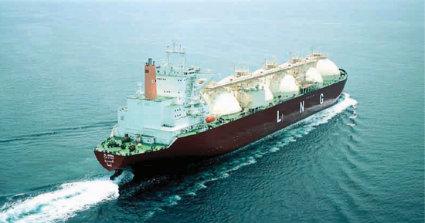
Gas prices remained stable as investors monitored market developments and geopolitical factors that could influence price trends in the coming period.
Digital transformation is no longer optional… with the launch of “Task Link,” Dar Al Sharq is redefining technical workflow management with greater efficiency and speed.